How to Avoid Cookie-Cutter Website Designs
January 12th, 2026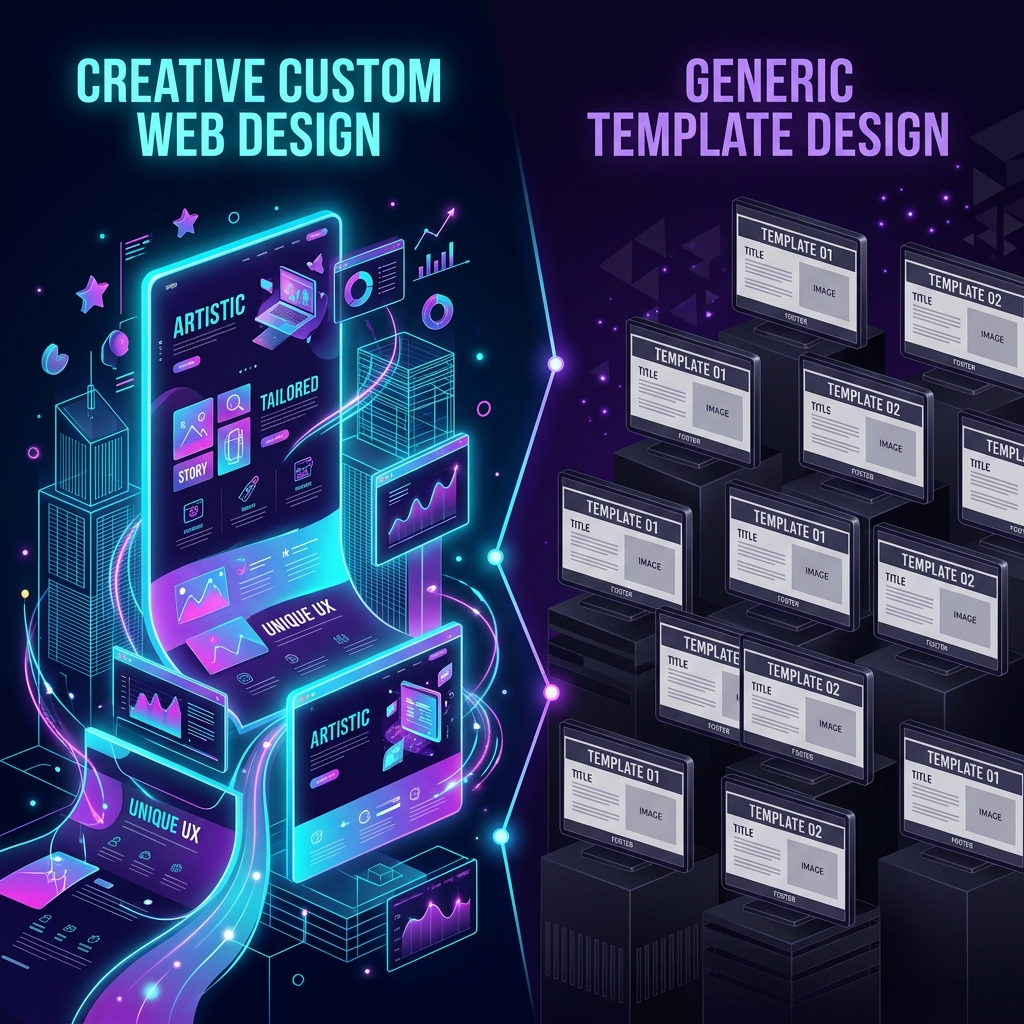
And Build a Website That Actually Represents Your Business
If you've looked at enough business websites, you start to notice a pattern.
- Same layouts.
- Same stock photos.
- Same generic headlines.
While templates can be helpful, relying on them too heavily often results in a website that looks like everyone else's — and fails to communicate what actually makes your business different.
Here's how businesses can avoid cookie-cutter website designs and build a site that feels authentic, professional, and effective.
1. Start With Your Business — Not a Template
Cookie-cutter websites usually start with design instead of strategy. Before choosing layouts, colors, or fonts, define:
- Who your customers are
- What problems you solve
- What makes your business different
- What action you want visitors to take
When your website is built around your business goals, the design supports the message — not the other way around.
2. Use Real Messaging, Not Generic Headlines
Phrases like "Quality Service You Can Trust" or "We Strive for Excellence" don't tell visitors anything meaningful.
Instead:
- Explain what you do in plain language
- Be specific about who you help
- Describe how your process works
Clear, honest messaging instantly sets your site apart — even with a simple design.
3. Customize Structure, Not Just Colors
Many websites change colors and logos but keep the exact same page structure.
To avoid this:
- Organize pages around your services, not a template's defaults
- Highlight what customers ask about most
- Add or remove sections based on how people actually use your site
A custom structure makes your site feel intentional — not recycled.
4. Use Real Photos Whenever Possible
Stock photos are one of the fastest ways to make a site feel generic.
Whenever you can:
- Use photos of your team
- Show real projects or workspaces
- Include behind-the-scenes images
Even imperfect real photos build more trust than perfect stock images.
5. Focus on Clarity Over Creativity
Small businesses often worry about being "unique," but clarity matters more than clever design.
A strong website:
- Is easy to navigate
- Explains services quickly
- Makes it obvious how to get in touch
A clear website that feels genuine will outperform a flashy but confusing one every time.
6. Build for Growth, Not Just Launch Day
Cookie-cutter sites are often hard to update or expand.
Avoid this by:
- Choosing flexible layouts
- Planning for future pages or services
- Making content easy to update
Your website should grow with your business — not hold it back.
7. Work With a Developer Who Asks the Right Questions
The biggest difference between custom and cookie-cutter websites isn't code — it's process.
A good web developer will ask about:
- Your customers
- Your sales process
- Your goals
- How you plan to use the site
If the process starts with "pick a theme," you're likely heading toward a generic result.
A Custom Website Doesn't Have to Be Complicated
Avoiding cookie-cutter design doesn't mean reinventing the wheel or building something overly complex. It means:
- Clear messaging
- Thoughtful structure
- Intentional design choices
When your website reflects how your business actually operates, it feels professional, trustworthy, and unique — without unnecessary complexity.
Insights and Intel
Helpful tips, insights and data to drive your business

How the Z4 Timecard Application Can Work With Virtually Every Accounting System
For many contractors and businesses, time tracking is not the hard part. Getting clean, accurate data into your accounting system is. Between different software platforms, union requirements, job reporting and costing needs, integration can be a challenge.
Learn More
How to Avoid Cookie-Cutter Website Designs
And build a website that actually represents your business. Learn how businesses can avoid templates and generic headlines to establish custom structure, messaging, and real visuals.
Learn More
Why Time Tracking Fails (and What Actually Works)
Time-tracking should be simple. Yet for many companies, it has become one of the most frustrating parts of the business. Explore why systems fail and how to establish workflow-friendly tracking.
Learn More